
The Grocery Bill Lie: You're Spending $400 More Than You Think
By The Lighten Debt Team
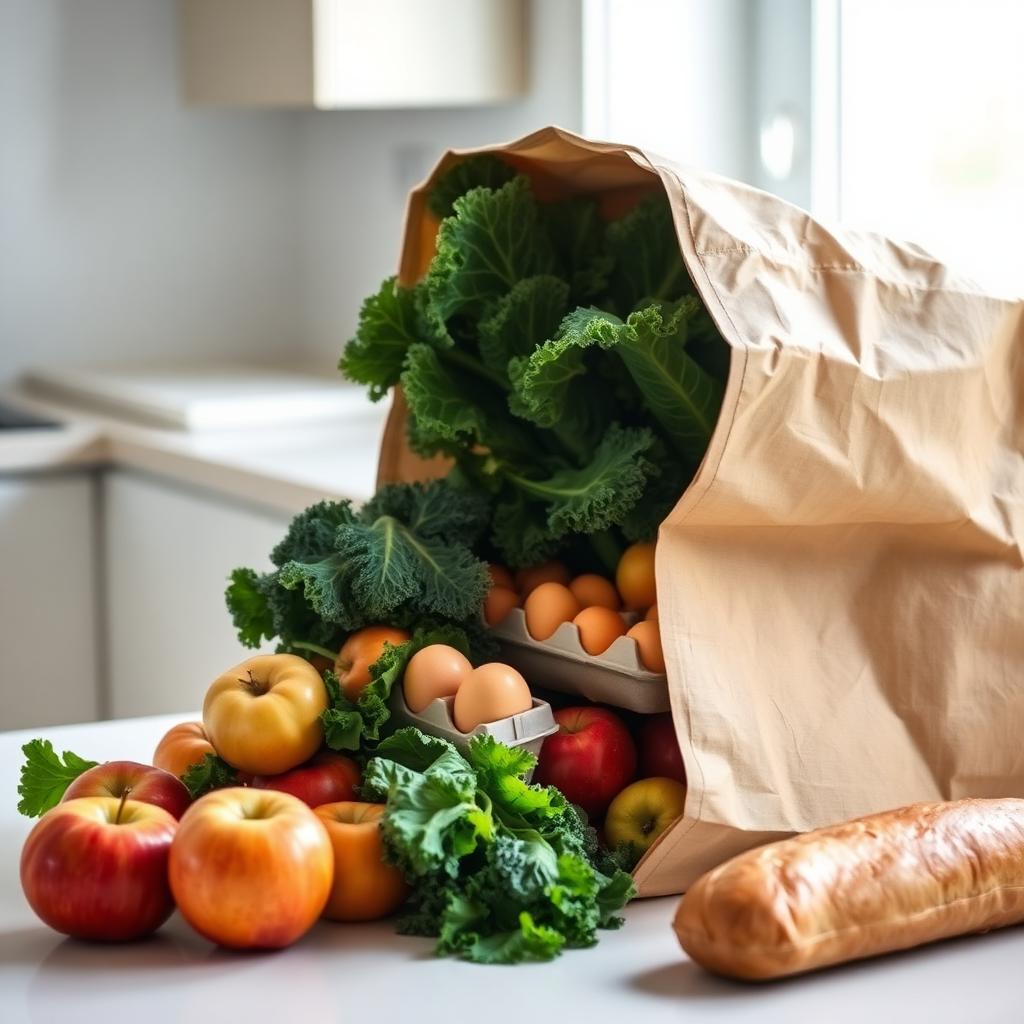
Quick: how much did you spend on groceries last month?
Whatever number you just guessed, the real number is almost certainly $200–$500 higher. Not because you're lying to yourself — because the way groceries are designed in 2026 makes it nearly impossible to track them accurately in your head.
Let's break down where the extra $400 actually goes.
Where the gap comes from
1. "Grocery" purchases that aren't groceries. Your Target run included a pack of socks, a face wash, two birthday cards, and a $19 candle. All of it shows up on the credit card as a single "Target" charge categorized as Groceries by your bank's auto-categorization. About 35% of average "grocery" spending isn't actually food.
2. "Quick stops" that don't feel like grocery shopping. The Wednesday-night Whole Foods run for "just dinner stuff" — $48. Friday at 7-Eleven for snacks — $14. Saturday at the farmers market — $36. None of these feel like a grocery trip. All of them are. They add about $160/month that doesn't get counted.
3. Delivery fees, tips, and "service charges." Instacart on a $90 grocery order:
- Items: $90
- Service fee: $9
- Delivery fee: $5.99
- Driver tip: $13
- Markup on items vs. in-store: ~$11
Total: $128.99 for $90 of groceries. That's a 43% markup you don't see. Average household using delivery 2x/month loses $80–$140 to this gap monthly.
4. The "I'm here, I might as well" tax. Studies of grocery basket data show shoppers spend 18% more on the average trip vs. their own pre-listed budget. Every trip. The phenomenon is so reliable that store layouts are engineered around it (perimeter pattern, end-cap promotions, checkout impulse zone).
5. Receipt-creep on staples. You think bread is $3.50. It's $5.20 now. You think a dozen eggs is $3.80. It's $5.40 in most metros. Your mental price list is from 2021. Even buying the same items as 3 years ago, the same basket now costs about 27% more.
The real average
US Department of Agriculture's "moderate-cost" food plan for a family of four in 2026: $1,236/month.
Most households estimate they spend $800–$900. When their actual receipts are audited, they're at $1,250–$1,400.
The $400 gap isn't waste, exactly. It's invisibility. You can't fix what you don't see.
How to actually find the leak
A one-time, two-week exercise:
Week 1: Print every grocery-categorized charge for the last 30 days. Don't trust the bank's category. Look at each merchant.
- Target/Walmart/Costco runs: how much was actually food?
- "Grocery" stores: was it a planned trip or a quick stop?
- Delivery: what was the items-vs.-fees split?
Week 2: Track each grocery trip manually. Write "list amount" before you shop. Write "actual amount" after. The gap is your real-time creep — usually 15–25%.
After 2 weeks of this, you'll know exactly where the $400/month is. It's almost always one of these three:
- Big-box runs where non-food costs $80–$140 per trip
- Delivery-fee tax on weekly orders
- Quick stops that aggregate to 6–8 trips/month
The fixes that actually move the number
1. Cap big-box runs at 1x/month, with a written list and a hard total. If you go twice a week, the spending will be 2x. The store layout is built to ensure it.
2. Drop delivery for normal weekly shopping. Keep delivery for the genuinely-time-constrained week (postpartum, illness, work crunch). The $80–$140/month savings is real. Allow Instacart for 1 week out of 4 max.
3. Pre-write the list, then never deviate. "I'll just grab" purchases are the entire leak. Anything not on the list goes on next week's list — not in this cart.
4. Buy proteins in bulk, divide and freeze. This is the only "frugal grocery tip" that holds up to math. A 4-lb pork shoulder at $4/lb beats a 1-lb pack at $7/lb. Cooking 4 meals from one purchase beats cooking 1 from one. Average savings: $80/month.
5. Cap "snack and drink" spending in one category. The biggest hidden food expense in most American households is "drinks and snacks that aren't meals" — soda, chips, energy drinks, fancy waters, premium yogurts, salty things. Track it separately for a week. The number will shock you.
The honest sentence
Groceries are a category designed for invisibility. The stores know exactly how much you'll spend before you walk in. You don't — until you measure it. Measure it once, fix the three biggest leaks, and you'll free up $300–$500/month without eating differently. That's the size of a credit card payment. It's been sitting in your shopping habits the whole time.
This article is for educational purposes only and does not constitute legal or financial advice. Lighten Debt is not a law firm. Results vary by individual.
Get your free debt-payoff plan
Drop your email and we'll send you a simple, step-by-step plan to get out of debt — plus one short tip a week. No spam, unsubscribe anytime.
Ready to consolidate?
Stop reading about debt. Start getting out of it.
See your real consolidation options in 60 seconds. One fixed payment, a real payoff date, no credit score impact to check.
More reading
- The August Debt Challenge: 30 Days to a New Habit
You don't need a perfect plan. You need one month of proof that you can change. The 30-day August debt challenge that builds momentum fast.
- Your Tax Refund Should Go to Debt, Not a Vacation
The average $3,400 tax refund feels like a bonus. It's not. It's your money the IRS held all year. Why it should hit your debt first.