
The Emergency Fund You Don't Have Is Why You're in Debt
By The Lighten Debt Team
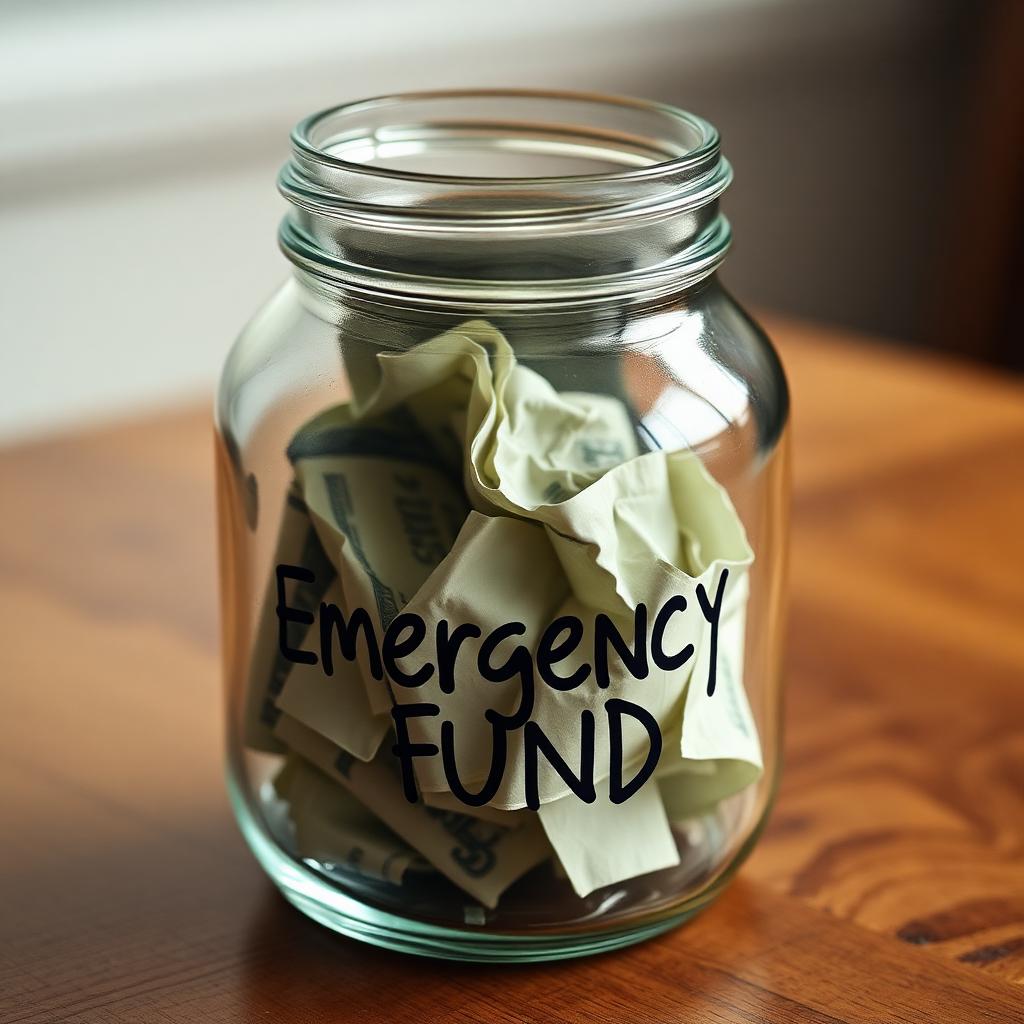
Every dollar of your credit card debt has an origin story. Trace it back honestly and you'll find the same culprit every time: an unplanned expense you had to put on plastic because there was nothing in savings.
The car battery. The vet bill. The deductible. The flight home for the funeral. Each one felt like a one-off emergency. They weren't. They were a category — and you have no defense against the category.
The brutal math
56% of Americans cannot cover a $1,000 emergency from savings. (Bankrate, 2025)
So when the $1,000 emergency hits — and it hits, on average, 3.2 times per year per household — they put it on a credit card at 24% APR. If they pay it off over 12 months, that $1,000 becomes $1,134. If they only pay the minimum, it becomes $2,800 over 8 years.
That's how a household making $85,000 ends up with $19,000 in credit card debt. Not stupidity. Not luxury. Just three vet bills, two car repairs, and one ER visit per year — with no buffer.
Why you "can't" save an emergency fund
The standard advice — "save 3–6 months of expenses" — is paralyzing. For a household with $4,500/month in expenses, that's $13,500 to $27,000. Looking at that number, most people give up before they start.
That number is wrong for where you are. You don't need 6 months. You need $1,000.
Why $1,000 changes everything
$1,000 covers the median emergency expense in the US. Not all of them — but most of the ones that currently force you onto a credit card.
The shift is psychological:
- Without an emergency fund: every surprise is a debt event.
- With $1,000: the surprise is a withdrawal, not a debt.
Your credit card stops growing. That alone is worth more than any other money move you'll make this year.
How to actually get to $1,000 in 60 days
For a household making median income:
- Sell something. Yes, really. Marketplace, eBay, Poshmark. The average American has $3,700 of resellable stuff sitting in their house. Target: $400.
- Pause one subscription tier for 60 days. Streaming, gym, meal kit. Target: $80.
- Cook every meal for 30 days. No exceptions. Average household saves $420/month vs. eating out.
- Sweep small wins. Cashback, refunds, $20 here, $50 there — all goes to the fund, not the checking buffer.
That's $900–$1,000 in 60 days for almost any household, without earning a single extra dollar.
The rule after you hit $1,000
You do not touch it. Not for a sale. Not for a vacation. Not because the account is "just sitting there." It is not sitting there — it is working. Its job is to keep you off the credit card.
The day you stop adding to your debt is the day you start getting out of it. $1,000 in cash is what makes that day possible.
This article is for educational purposes only and does not constitute legal or financial advice. Lighten Debt is not a law firm. Results vary by individual.
Get your free debt-payoff plan
Drop your email and we'll send you a simple, step-by-step plan to get out of debt — plus one short tip a week. No spam, unsubscribe anytime.
Ready to consolidate?
Stop reading about debt. Start getting out of it.
See your real consolidation options in 60 seconds. One fixed payment, a real payoff date, no credit score impact to check.
More reading
- The August Debt Challenge: 30 Days to a New Habit
You don't need a perfect plan. You need one month of proof that you can change. The 30-day August debt challenge that builds momentum fast.
- Your Tax Refund Should Go to Debt, Not a Vacation
The average $3,400 tax refund feels like a bonus. It's not. It's your money the IRS held all year. Why it should hit your debt first.