
The Car Payment You Can't Afford
By The Lighten Debt Team
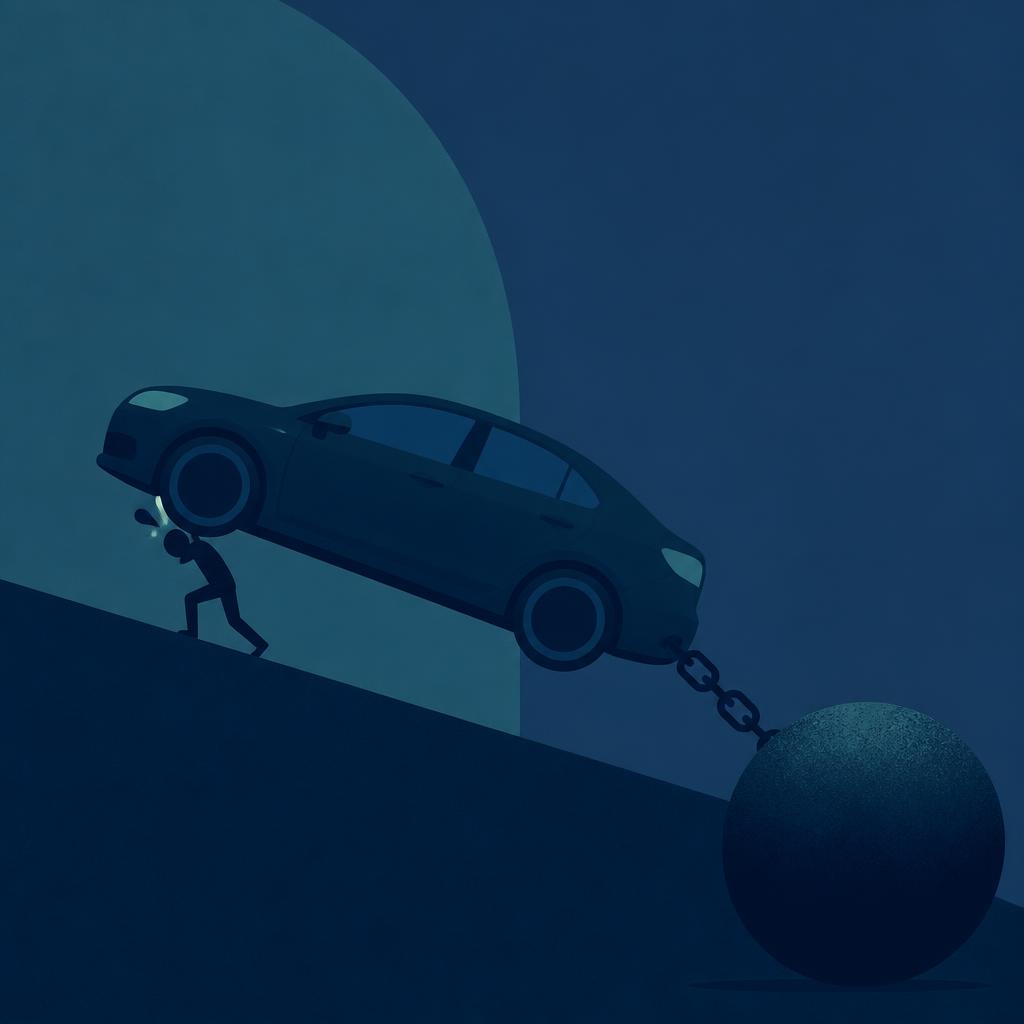
The average new car payment in the U.S. is now $735/month. The average used car payment is $526. That's before insurance, gas, maintenance, and registration.
For most people, the car is the second-biggest monthly expense after housing. And it's the easiest place to go wrong.
How much car you can actually afford
The 20/4/10 rule is a useful ceiling:
| Rule | Meaning |
|---|---|
| 20% down | Put at least 20% down to avoid being underwater |
| 4 years | Finance for no more than 48 months |
| 10% income | Total car expenses under 10% of gross income |
If you make $60,000/year, your total monthly car cost should be under $500. That includes payment, insurance, gas, and maintenance.
Most people are way over that.
The escape routes
If you're already trapped in a car payment:
| Option | When it works |
|---|---|
| Sell the car | If you have equity or can cover a small gap |
| Refinance | If your credit improved since purchase |
| Downsize | Trade for a cheaper, reliable car |
| Keep it and pay aggressively | If you love the car and can cut elsewhere |
The worst option is doing nothing. A car payment that consumes 20% of your income is an emergency, not a lifestyle.
The better default
Buy a reliable used car for cash or with a very short loan. The goal is to be free of car payments within a few years, then drive that car for as long as it runs.
A $10,000 car paid off is worth more than a $35,000 car with 48 payments left.
The honest read
Cars are depreciating assets. They lose value every day. A big car payment is a bet on your future income that usually doesn't pay off.
The people who build wealth are not the ones with new cars. They're the ones who stopped making car payments a decade ago.
This article is for educational purposes only and does not constitute legal or financial advice. Lighten Debt is not a law firm. Results vary by individual.
Get your free debt-payoff plan
Drop your email and we'll send you a simple, step-by-step plan to get out of debt — plus one short tip a week. No spam, unsubscribe anytime.
Ready to consolidate?
Stop reading about debt. Start getting out of it.
See your real consolidation options in 60 seconds. One fixed payment, a real payoff date, no credit score impact to check.
More reading
- The August Debt Challenge: 30 Days to a New Habit
You don't need a perfect plan. You need one month of proof that you can change. The 30-day August debt challenge that builds momentum fast.
- Your Tax Refund Should Go to Debt, Not a Vacation
The average $3,400 tax refund feels like a bonus. It's not. It's your money the IRS held all year. Why it should hit your debt first.