
The 50/30/20 Budget for People Actually in Debt
By The Lighten Debt Team
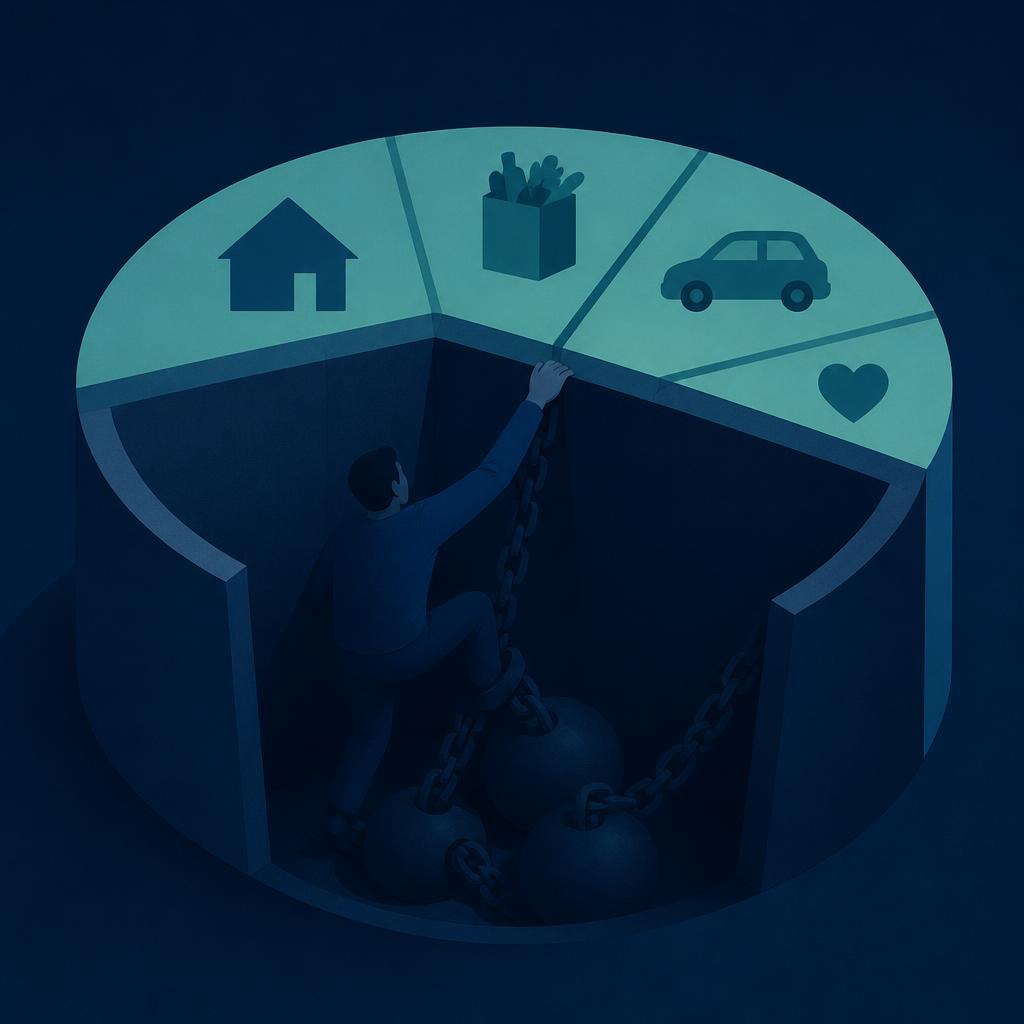
The classic 50/30/20 budget says:
- 50% needs
- 30% wants
- 20% savings
That works for someone with no debt and stable income. For everyone else, it's a recipe for staying in debt forever.
If you have high-interest debt, savings comes second. Paying 24% APR while earning 4% in savings is losing money on purpose.
The debt-adjusted version
| Category | Percentage | Includes |
|---|---|---|
| Needs | 50% | Housing, utilities, food, transportation, minimum debt payments |
| Debt payoff | 20-30% | Extra payments above the minimum |
| Wants | 10-15% | Everything non-essential |
| Savings | 5-10% | Small emergency fund only until debt is gone |
If your debt is above 15% APR, the debt payoff category should be closer to 30%. If your debt is low-rate, 20% is fine.
What the emergency fund looks like
Don't build a 6-month emergency fund while carrying credit card debt. Build a $1,000-$2,000 buffer, then throw everything else at the debt.
| Step | Action |
|---|---|
| 1 | Save $1,000 mini emergency fund |
| 2 | Pay minimums on all debts |
| 3 | Throw all extra money at highest-rate debt |
| 4 | Rebuild full emergency fund once debt is gone |
The small fund prevents new debt. The aggressive payoff eliminates the old debt.
The honest read
The 50/30/20 rule is not a universal law. It's a starting point for people with normal finances. If your finances are not normal, your budget shouldn't be either.
When you're in debt, your wants category shrinks. Your debt payoff category grows. That's not deprivation. That's prioritization.
This article is for educational purposes only and does not constitute legal or financial advice. Lighten Debt is not a law firm. Results vary by individual.
Get your free debt-payoff plan
Drop your email and we'll send you a simple, step-by-step plan to get out of debt — plus one short tip a week. No spam, unsubscribe anytime.
Ready to consolidate?
Stop reading about debt. Start getting out of it.
See your real consolidation options in 60 seconds. One fixed payment, a real payoff date, no credit score impact to check.
More reading
- The August Debt Challenge: 30 Days to a New Habit
You don't need a perfect plan. You need one month of proof that you can change. The 30-day August debt challenge that builds momentum fast.
- Your Tax Refund Should Go to Debt, Not a Vacation
The average $3,400 tax refund feels like a bonus. It's not. It's your money the IRS held all year. Why it should hit your debt first.